Commercial treadmill maintenance: belt, motor and deck
A commercial treadmill has three failure points. Stay ahead of all three and the machine runs for a decade. Ignore one and it dies in peak hour.
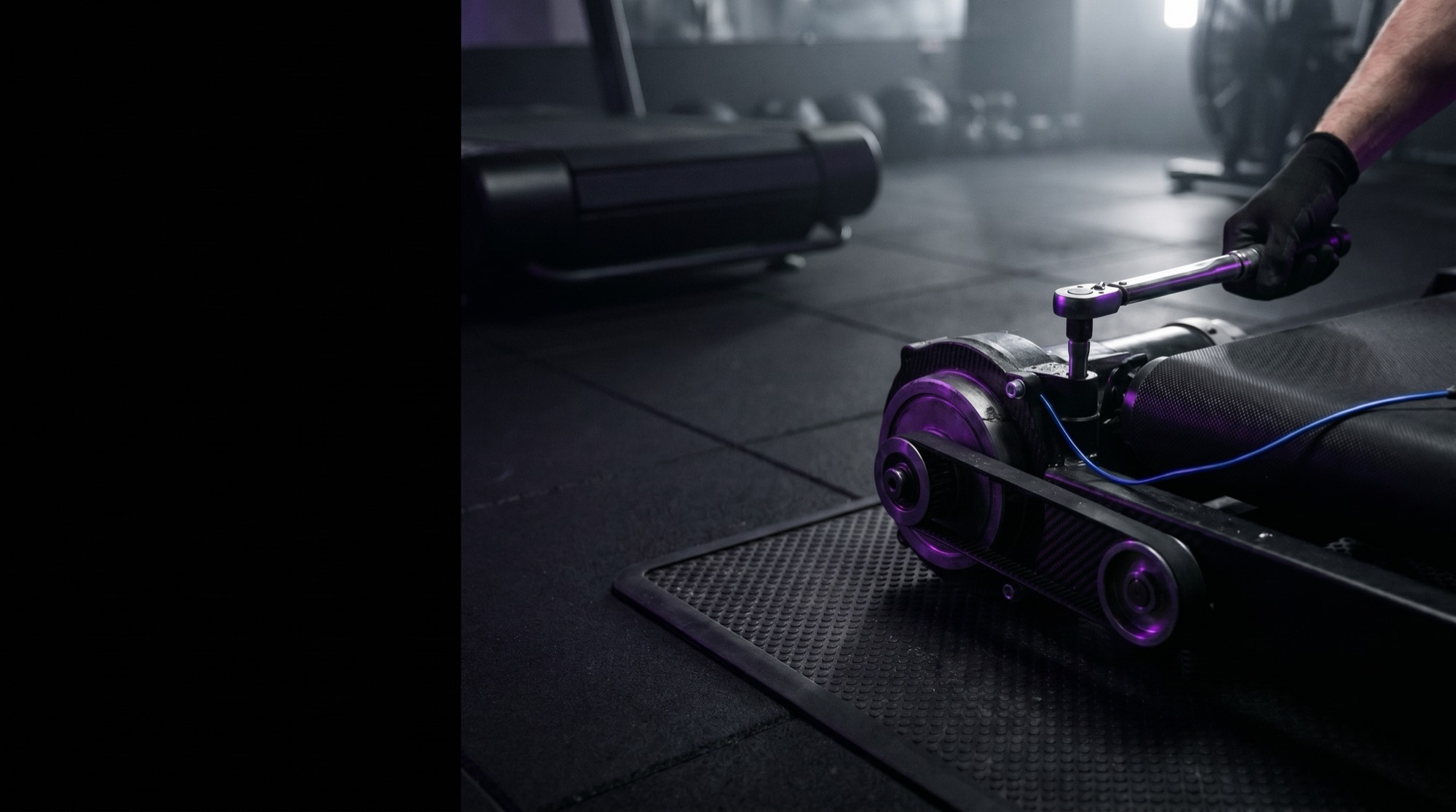
- The three failure points are the belt, the motor and the deck, and they are connected.
- Dust in the motor hood is the number-one cause of commercial treadmill failure.
- A worn belt left too long will destroy the deck underneath it.
- Monthly silicone lubrication and quarterly professional servicing keep all three healthy.
Treadmills are the workhorses of any commercial gym and the first machines to fail when maintenance slips. The good news is that almost every treadmill failure traces back to one of three components: the running belt, the drive motor and the deck. Understand how these three interact and you can prevent the vast majority of breakdowns before they cost you a machine.
The belt: your first line of defence
The running belt takes the full impact of every footfall, and it wears from both sides. The top surface abrades from shoes; the underside glazes as the friction-reducing coating breaks down. A worn belt does not just feel rough. It increases friction, which forces the motor to work harder and run hotter, and a glazed belt can score the deck beneath it.
Check the belt weekly for alignment and fraying, and inspect the underside monthly. If the underside feels slick and dry rather than waxy, it is time to lubricate or replace. Keep the belt centred and correctly tensioned: a belt that drifts or slips chews through rollers and bearings.
Rule of thumb: if you can hear the belt slipping under a runner's stride, the motor is already working overtime to compensate.
The motor: keep it cool and clean
The drive motor is the most expensive single part to replace, and the most preventable failure on the machine. Its enemy is dust. Lint, hair and skin cells get drawn into the motor compartment and settle on the windings, where they act as insulation and trap heat. Over months, that heat cooks the motor.
The fix is simple and cheap: vacuum out the motor hood regularly, every one to two months in a busy gym. While the hood is off, check that wiring is secure and connectors are seated. A technician should test the motor and speed controller under live load during the quarterly service to catch a motor that is drawing too much current before it fails outright.
The deck: the part you forget until it is too late
The deck is the board the belt runs on, and it is the most overlooked component because you never see it. A healthy deck is smooth and lets the belt glide. A neglected deck, run under a worn unlubricated belt, develops friction grooves that you cannot reverse. At that point the deck needs resurfacing or replacement, and the bill is far larger than the belt that caused the damage.
Deck care is really belt and lubrication care. Keep the belt in good condition, lubricate to spec, and the deck looks after itself. This is exactly why a small monthly habit prevents a large quarterly bill.
When you lubricate, lift the belt and apply silicone to the deck, not the top of the belt. Applying lubricant to the running surface makes it slippery and dangerous, and does nothing for the friction point underneath.
A simple treadmill maintenance rhythm
| Frequency | Task |
|---|---|
| Daily | Wipe down, listen for new noises, check the emergency stop. |
| Weekly | Vacuum around the machine, check belt alignment and fraying. |
| Monthly | Vacuum the motor hood, check belt tension, lubricate the deck with silicone. |
| Quarterly | Professional service: motor and controller test, deck wear, drive alignment, calibration. |
For the full multi-machine version, use our maintenance checklist, and see why silicone, never WD-40 for the lubrication detail. When the quarterly diagnostic is due, book a Trainr Tech technician; we carry common belts, rollers and motors, so most treadmill faults are fixed on the first visit.
Frequently asked questions
Dust and debris in the motor compartment. It insulates the motor, causes overheating and shortens its life. Regular vacuuming of the motor hood prevents most of it.
Run your hand under the belt: a smooth, slick underside means it is worn. Other signs are a rough or hot surface, slipping under load, and fraying at the edges. Replace before it scores the deck.
Monthly for high-traffic commercial use, using a silicone lubricant designed for treadmills. Never use WD-40 or oil-based products, which damage belts and decks.